
From first curiosity about medicine to a medical school offer.
A programme that grows with you: teaching from doctors, a personal mentor, clinical and research experience, and a project you can call your own.
Our paths have crossed with:










What is the Medefine Academy?
A programme for international school students, run by UK doctors and medical students. Some students join to find out whether medicine is for them. Others join to prepare their application. Either way, it is built from the same four parts.
How the Academy works
Four parts that run together all year. Here's what each one involves and why it matters.
- 01
Core curriculum
A live group session each month, taught by doctors.
You learn about medicine, ethics and healthcare systems well beyond the school syllabus, and older students cover UCAT, applications and interviews.
- 02
Personal mentor
A 1:1 meeting with your own doctor or medical student every month.
Each one starts with how school and life are going, then focuses on what you need next, whether that is subject choices, UCAT or interview practice.
- 03
Internships and experience
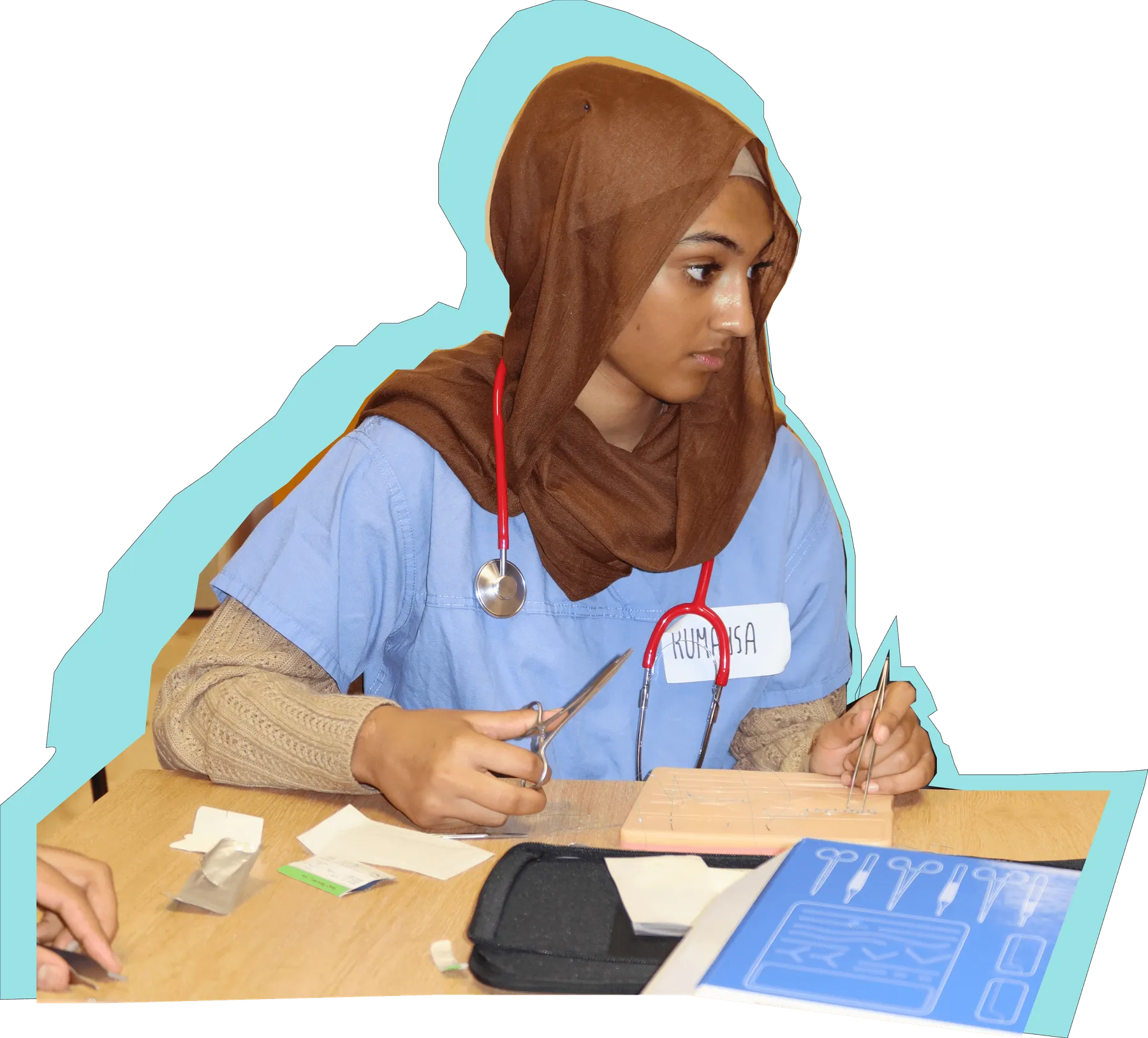
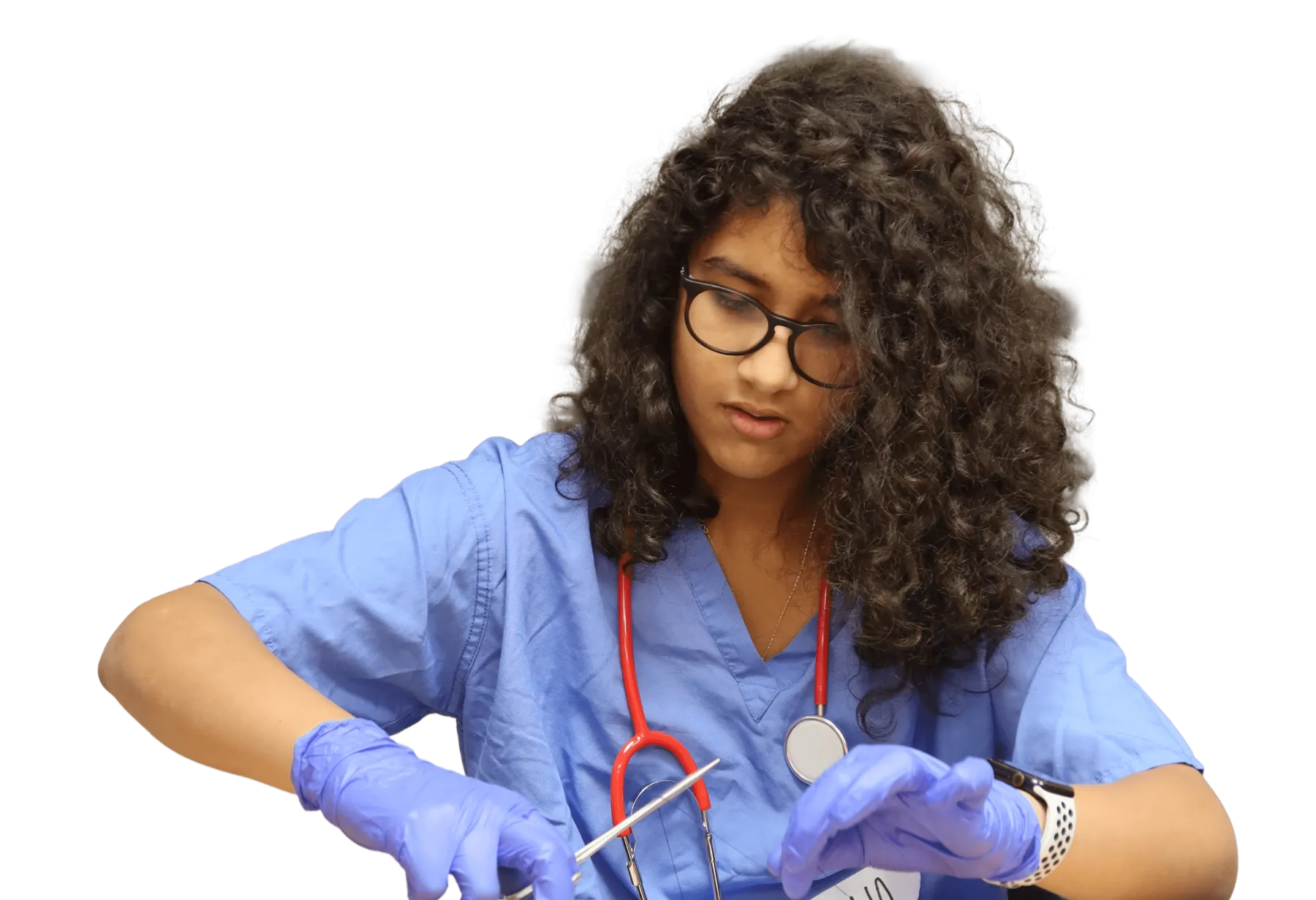
Clinical and research internships, run in set blocks during the year.
You see medicine for yourself, and your mentor helps you reflect on it in a way medical schools value.
- 04
Personal project
At least one health project that you plan and lead.
Past students have made research posters, podcasts, awareness campaigns and a cookbook. It gives you something real to talk about.
What a normal month looks like
Not everything happens every week. This is the usual rhythm, planned around school and exams.
| When | What | Details |
|---|---|---|
| Every month | Live group session with doctors | Online, recorded if you miss it |
| Every month | 1:1 with your mentor | Booked at a time that suits you |
| Ongoing | Work on your personal project | With resources and project guides |
| Set blocks | Internships and events | Clinical and research internships, conferences |
Learn from people who have been where you are
Many of our mentors started out as international school students. They have dealt with the same questions about which country to apply to, fee status and fitting UCAT around IB or A levels. Now they are doctors and medical students at some of the best medical schools in the world.
Your mentor stays with you, so they get to know you and can help you make plans that fit.
Choose your Academy pathway
Two stages from Year 9 to Year 13. Pick the one that fits where you are now.
- Exploration
- Foundations
- Early Exposure
Academy for students in Years 9–11
Best for students in Years 9–11 (ages ~13–16)
For students curious about biology, chemistry or healthcare who want to find out whether medicine is right for them.
- Discover if medicine is the right fit as a career
- Early clinical case discussions, introduction to anatomy and ethics
- Confidence, public speaking & teamwork
- Leadership, research and health projects
- Doctor-led mentorship and accountability
- Admissions
- Strategy
- Offer Preparation
Academy Years 11–13
Best for students in Years 11–13 (ages ~15–18)
For students preparing to apply to medical school, with a plan for UCAT, personal statements and interviews and experience to back it up.
- UCAT preparation and mock examinations
- Personal statement development and refinement
- Interview preparation
- Clinical and research work experience, medical leadership projects
- Ongoing doctor-led mentorship

Not sure which one fits?
Tell us your year group and goals and we'll recommend the right one.
Contact UsWhat you get inside the Academy
The UK medical school application process
How does early preparation help?
- Create a professional profile (CV and LinkedIn)

- Begin researching medical schools

- Confirm that medicine is the career for you

- Time management skills

- Tailor extracurricular activities for every university that you want to apply to

-
 Have a good understanding of advancements in science and scientific research
-
 Anatomy and physiology introduction
-
 Gain clinical and community experience
-
 Develop the confidence in debating and speaking skills
-
 Explore healthcare careers (examples of healthcare careers)
Most UK medical school places go to home students. International students compete for a small share of places, which is why a clear plan matters.
See what our students make
Research posters and patient leaflets from past students, all their own work.
Questions parents ask us
What does my child actually get?
A monthly live session, a monthly 1:1 with a personal mentor, places on our internships, support with a personal project, and our resources. Older students also get UCAT, personal statement and interview preparation.
Who are the mentors?
Doctors and medical students, many of whom went to international schools themselves. Each student is matched with one mentor who gets to know them.
How much time does it take?
Around 6 to 8 hours a month, planned around school and exams. It increases for older students in the weeks before UCAT and interviews.
Is it online or in person?
The Academy runs online, so students can join from anywhere. Some events and experiences take place in person in Hong Kong, Singapore, the UAE and the UK.
Are hospital placements guaranteed?
Our clinical and research internships are part of the Academy. In-person hospital work experience depends on local availability, and we help students find and prepare for opportunities.
What if my child is not sure about medicine?
That's fine. Many students join to find out. If they decide on a different path in healthcare or science, the skills and experience still count.
How do we keep track of progress?
Mentors keep notes on every meeting, and parents can contact the team at any time. If something comes up, we will get in touch with you.
Do you offer scholarships?
Yes. Around 20% of our Academy students attend free of charge. Mention it on your introductory call.
How do we apply?
Fill in the short online application, then book a call with one of our doctors. We will talk through your goals and recommend the right pathway.